
Building Houses for Peace
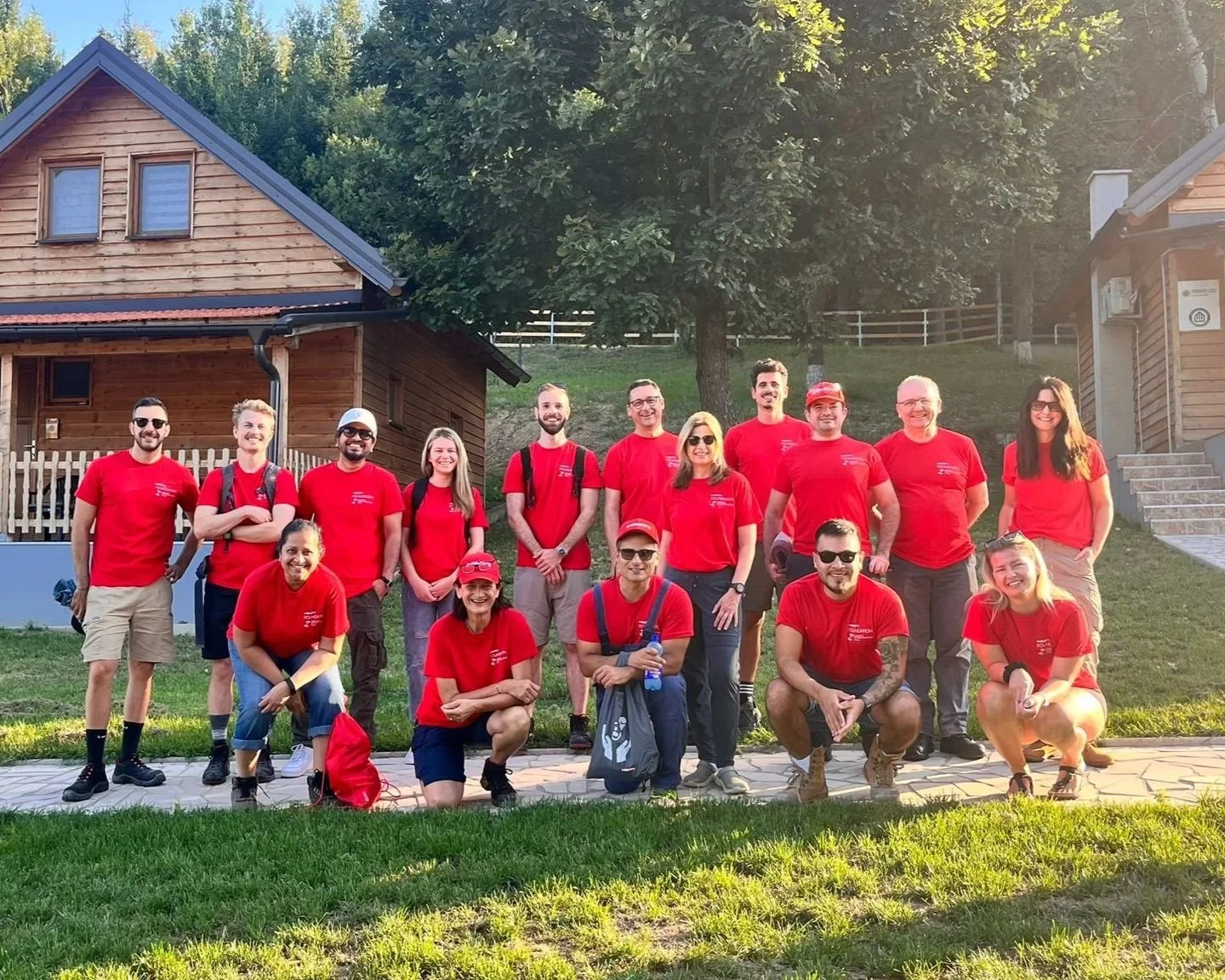
In 2014, twelve Hilti trainees and four coordinators traveled to Srebrenica in Bosnia in order to help out on the construction of two houses for the victims of war. With the support of the Hilti Foundation, what began as an ad hoc relief has now transformed into an Engaged Beyond Business (EBB) initiative in which 1,000 Hilti employees have already participated, who together have built more than 225 houses in the local area and performed more than 42,000 hours of voluntary service. Namir Porić has been there since the outset – initially as a coordinator and now as director of the partner organization House of Good Tones (HOGT). In the following interview he provides some topical insights into the remarkable cooperation.
Dear Namir, let’s start by looking back briefly: how did cooperation with Hilti actually start?
The very first contact with Hilti occurred in 2013. Christine Rhomberg from the Hilti Foundation was visiting Srebrenica and noticed our project. At the time I was still working for the association Farmers Help Farmers (Bauern helfen Bauern) set up by former Austrian politician Doraja Eberle, who is highly committed to humanitarian work. I then built up the entire program step by step alongside Bea Bättig-Staud from the Hilti Foundation.
How exactly have the Hilti Foundation and Hilti employees been supporting the construction of houses since then?
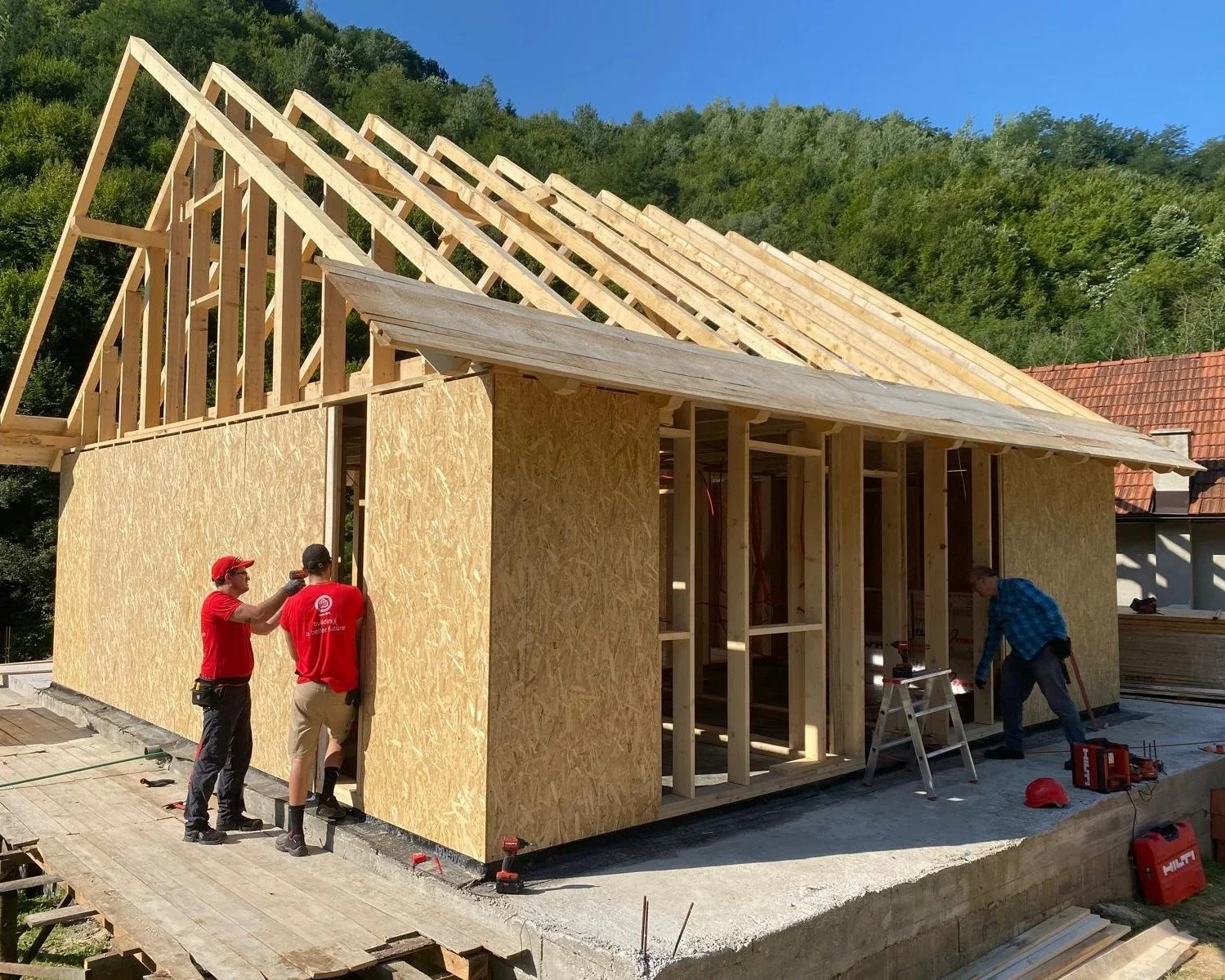
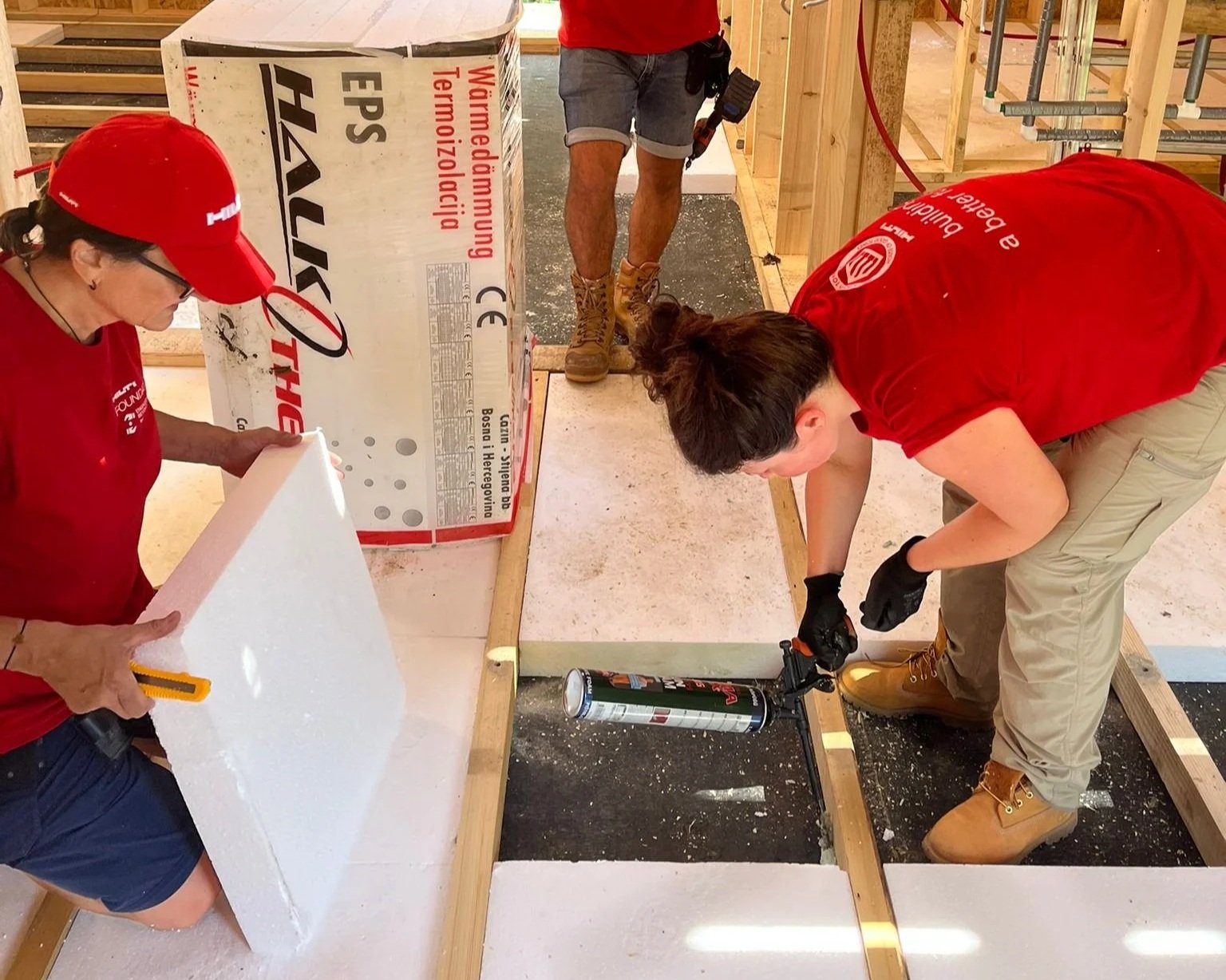
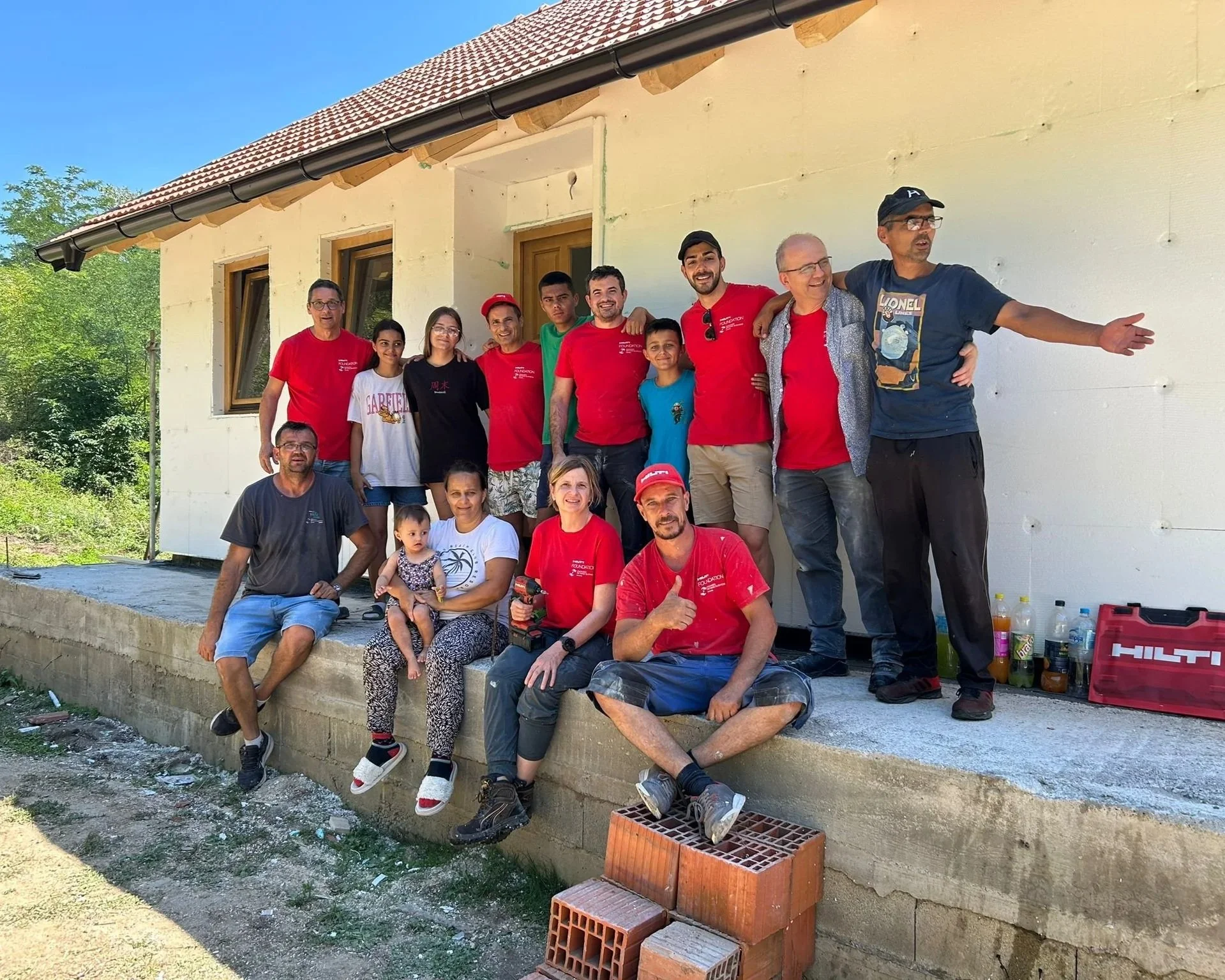
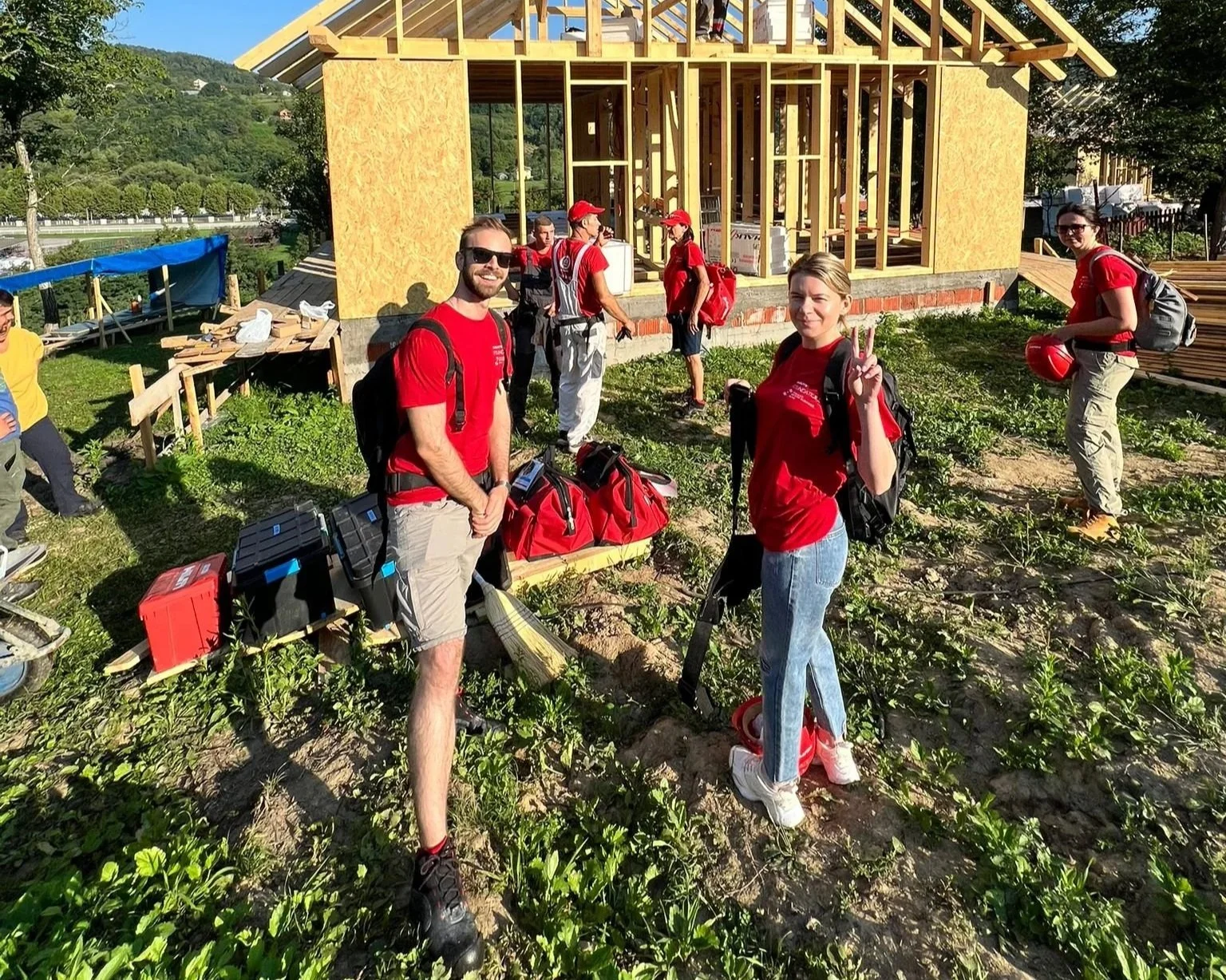
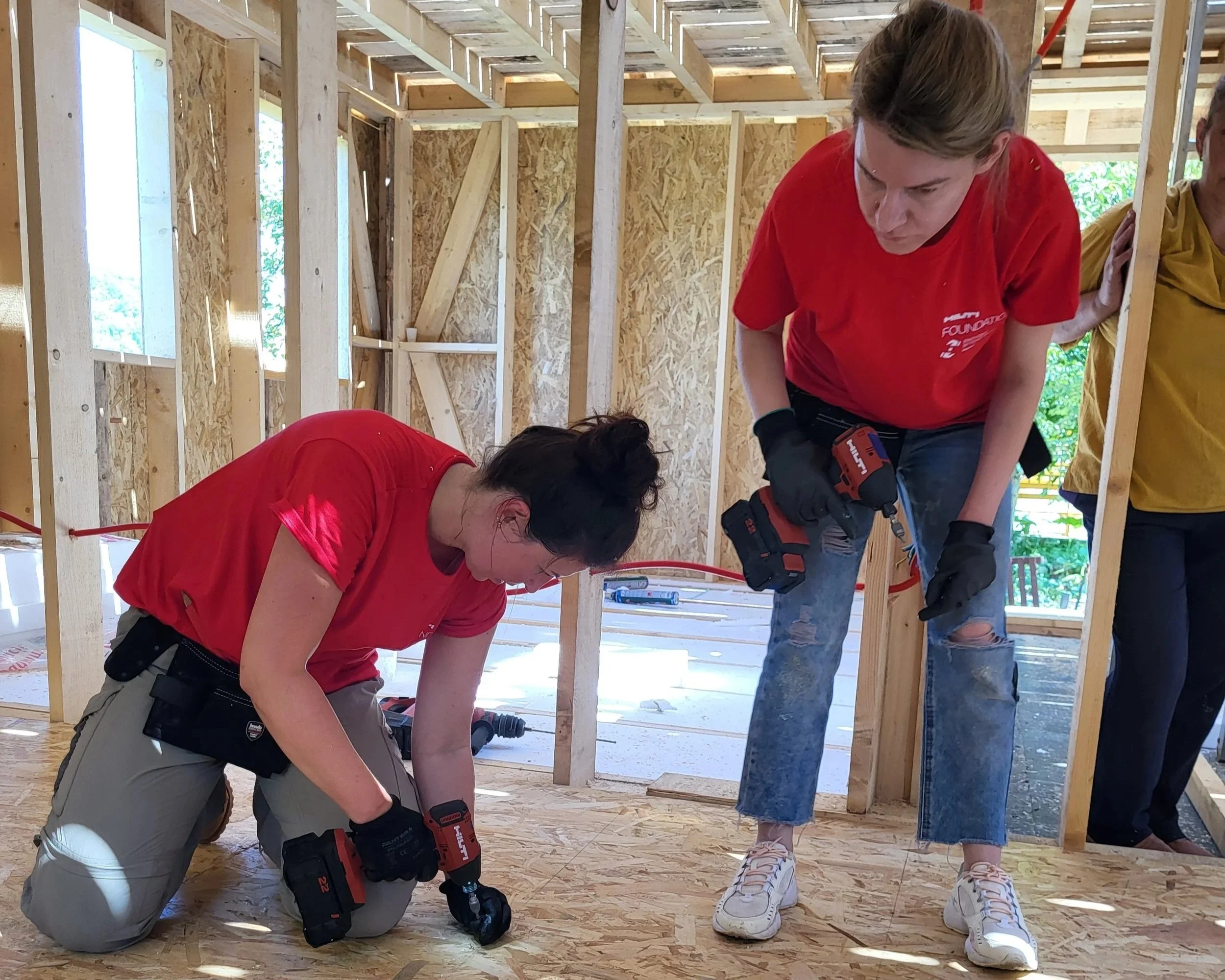
First of all, the Hilti Foundation covers the costs of the necessary construction material for the simple but highly functional wooden houses. The local beneficiaries only need to provide the building plot and the concrete foundations. Hilti team members from around the world then take part in the actual building work, which is quite demanding. The building work takes one week, which is normally enough time to complete the house, down to the necessary electrical and plumbing work.
Has the design of the houses changed at all over the years?
Initially we built very simple wooden houses without any plumbing, which could be described more as a ‘roof over their heads’. Nowadays, although our wooden houses are still quite modest, they are equipped with everything needed in order to be able to live in them all year round: good insulation, an efficient wood stove which heats the entire house also in winter, and naturally also a kitchen, bathroom and toilet. The houses currently have around 55 m2 of living space and, thanks to their efficient layout, can accommodate families of between two and six people.
What type of Hilti employees come to Srebrenica in order to help out building houses?
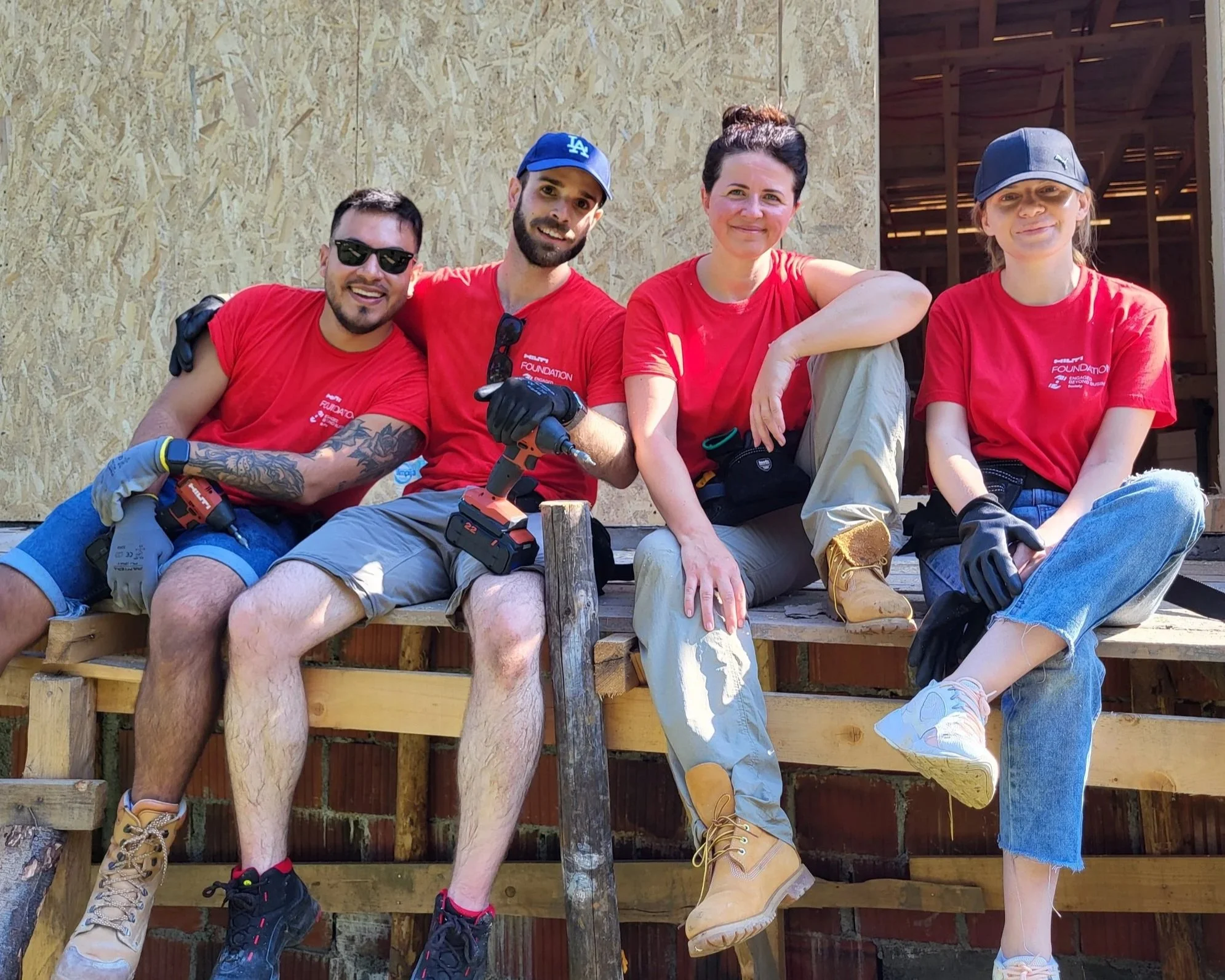
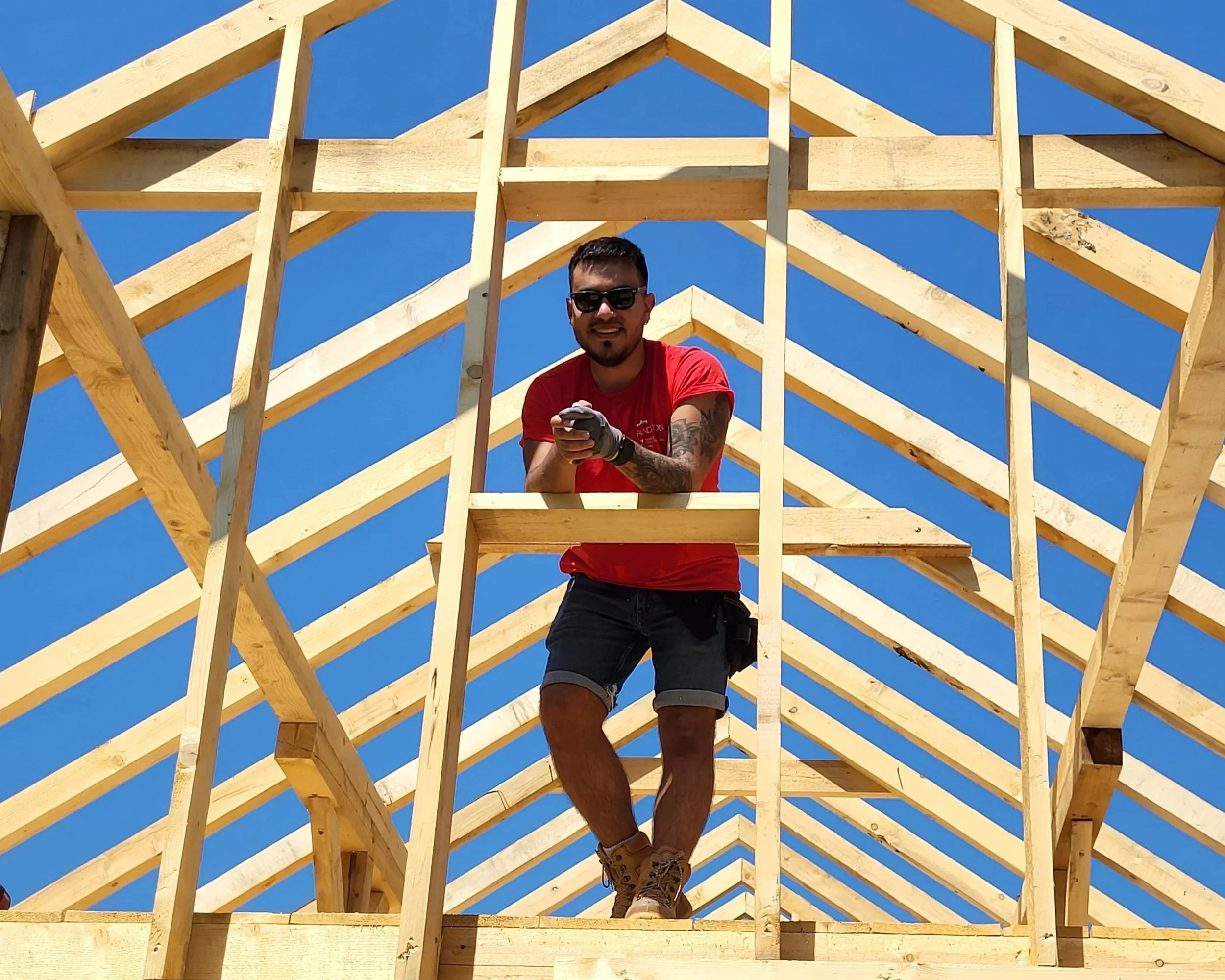
We have already had all sorts of people from Hilti working here on site: from apprentices through young managers to Board members. They originally come from a wide range of countries. All of them work for the same period of time – one week – alongside specialist staff provided by us who offer guidance to Hilti team members and direct the building work on site. In addition, the future occupants of the houses provide the entire building crew with food and drink. This feeling of working shoulder-to-shoulder creates a tangible sense of togetherness among the entire team every time, both in terms of the work performed and also on a human level.
That’s a great point: why is the construction of these houses in the Srebrenica area so important in human terms?
Srebrenica and the surrounding region are not only amongst the poorest areas in Europe. Like many regions in Europe, they also face the challenge of increasing numbers of people moving from the countryside into the cities due to a lack of economic opportunities and inadequate infrastructure. Building homes in which young families with children are able to live once again can certainly help to counter this trend and, on a small scale, also promote agricultural renewal.
In addition, due to the horrifying events that took place there during the war, the region also has a very specific significance. As we all know, terrible things happened here before the eyes of the world. By building houses we also make an important contribution to peace. We build them for both Bosniaks as well as Serbs.
Visits to the memorial in Srebrenica are a fixed part of the program for every team of Hilti volunteers. Why are these so important?
We quite deliberately arrange this for day three once people in the team have got to know one another better and have started to come together on the building site as one big family. The memorial, which is a state-run institution, explains the stark reality of the terrible genocide committed here in 1995. This must never be forgotten, also as a cautionary reminder so that nothing similar ever happens again.
At the same time, we need to set our sights firmly on the future, focusing on peaceful coexistence. After visiting the memorial, we then take Hilti team members to our music school where a children’s choir including people from different ethnic groups put on a small concert. For most people this is a very moving event, and also confirmation that peaceful coexistence is possible, and the younger generations are a particularly important part of this process.
Can you tell us something more about the music school?
The music school was founded, or rather rebuilt, around ten years ago thanks to a donation and without any state support. Today it operates as an association and is part of the HOGT Foundation. We are not a full-time school, but rather offer children aged between six and 16 a wide variety of music programs, from learning an instrument through to singing in a choir, as a complement to normal school teaching and the school curriculum daily from 8 a.m. until 5 p.m. In addition, children also get a warm, healthy meal from us as this unfortunately cannot be taken for granted within many families. We also organize transport in minibuses so that children from the bordering Serbian region can also use our programs. Since the music school was founded, or rebuilt, it has been attended by easily a couple of thousand children. At present around 350 Serbian and Bosniak children are attending the school.
Let’s get back to the building work and cooperation with Hilti. How significant are these for the region and for you personally?
I am still grateful every day at being able to work with such committed people and with a company like this – and through my work I have already got to know a large number of different foundations, companies and donors from throughout Europe.
We have already achieved a lot thanks to Hilti’s support so far and the voluntary involvement of so many team members from around the world. Together we have built hundreds of houses, enabling many families to return to their old home area. We are also sending out a powerful signal that peaceful cooperation and coexistence is possible in the region as well as the form it can take – irrespective of nationality, political conviction or religious belief.
Why would you recommend a work assignment in Bosnia to Hilti team members?
Quite simply, it is a fantastic and – in the truest sense of the word – priceless experience. Alongside the personal commitment to social responsibility, an event of this type naturally also helps build teamwork and team spirit. It is also possible to gain a direct and genuine insight into the country and the people from our region. This interaction can be very close on a human level and is often deeply touching. Even after all these years, there are still moments like this that bring tears to my eyes.
In addition, I simply believe that it is an indispensable and valuable experience especially for the younger generation as they only know about much of what happened in the past in Europe, which still has significant repercussions today, through secondhand accounts. Spending a week like this raises awareness and broadens or sharpens each individual’s own perspective.
Looking to the future, what are the next steps for the aid project?
Right now, we are carefully considering which strategy we should pursue in future. Although we already have some fixed plans for the next few years – thanks also to the support from Hilti –we will certainly not be building houses in Srebrenica forever. There are undoubtedly needs throughout the entire country. This means we’ll definitely be developing programs also in other regions, such as the south or the Sarajevo metropolitan area. This is naturally always associated with logistical issues too. We are currently carrying out the necessary preparatory work and research in order to set up a long-term program for the future.
To conclude, how would you reflect personally on the last few years?
I’ll be turning 65 this year and have been working in this field as a trained lawyer for almost 30 years. Had anyone predicted this when I was in my mid-30s, I would never have believed them. I’ve now been working in Srebrenica alone for 22 years and have seen a lot during this time. I have helped out on the construction of hundreds of houses, and know almost every family and every politician in the region. I have seen and experienced a huge amount of sadness and pain, which has taken its emotional toll on me at times.
But at the same time I can also remember the laughter and optimism so often shared with me by children, parents and also the elderly. I always see moments like this as a reward for what I have been able to do and achieve alongside many like-minded, committed people.
This region is a very special place for me due to its history. It is a place where we can send out a strong signal to the world of peaceful coexistence between different ethnic groups. We can show how this can in fact be achieved through individual determination and mutual respect. We all need signals like this now, more than ever.
In 2014, twelve Hilti trainees and four coordinators traveled to Srebrenica in Bosnia in order to help out on the construction of two houses for the victims of war.