
From Rock Bottom to Role Model
When Margaret Njui was a little girl, life brimmed with promise.
At her village primary school in Kenya’s central highlands, she excelled in class. Outside the classroom, she shone in the school choir, helping them win regional singing competitions. Everything seemed possible.
But that sense of optimism began to fade when she was 13 and started secondary school.
Until then, her family’s poverty had not made Margaret stand out. True, she and her two sisters were sometimes sent home from school because their parents could not pay the school fees. They also lived without electricity or running water. But in her rural village, none of this was unusual. According to government and UN data, two-thirds of the country’s rural households are not connected to the national grid while 85 percent do not have access to piped water — hardly surprising given that four in ten rural Kenyans earn less than 30 euros a month. That’s roughly one euro or about $1.05 a day, placing them well below the international line for extreme poverty of $2.15 per day.
Boarding school was different. Margaret had earned her place thanks to strong exam results, but many of her classmates came from wealthier families. For the first time, she encountered deep inequality. Some girls spoke better English. Others had newer clothes and more spending money. Margaret, whose education was funded by a charity, felt out of place and overwhelmed.
For two years she drifted, miserable and lonely, before resolving to pull herself together. Refocusing on her studies, she improved her grades, impressed her teachers and was selected as a student leader. Her dream was to become an electrician, tailor or plumber—maybe even a journalist. But to qualify for university, she needed a C+ average, a score earned by only about 20% of candidates.
Margaret worked hard, but when her exam results came in, she had earned a C. Her hopes imploded.
“I felt so disappointed,” she recalls. “I was so embarrassed I didn’t tell anyone at first—not even to my parents. When they found out they were also so disappointed.”
Defeated, she returned to the village. Unable to find work, she became a nanny to her cousin’s newborn. For seven months, her ambition withered. Depression took hold.
Eventually, something inside her stirred. She enrolled in a short computer course and started traveling to Nairobi, Kenya’s capital, in search of work. Her job hunting proved fruitless.
“It’s very difficult to get a job unless you have good certificates, which I don’t,” Margaret said. “People always ask, ‘what qualifications do you have? What course have you done?’”
According to government statistics, only about 20 percent of Kenya’s working-age population holds formal employment. With limited options and dwindling hope, Margaret was close to giving up.
Then, in August last year, she attended a church seminar in Nairobi and learned about PropelA, a vocational training initiative launched in 2022 by the Hilti Foundation, Geberit, and Swisscontact.
The program, aimed at training electricians and plumbers, stood out. If offered a government-accredited certificate, hands-on experience with partner companies, and a monthly stipend. Even better, women, were actively encouraged to apply.
For Margaret, it felt like an answer to prayer.
She had always been interested in electricity, she says, remembering how fascinated she had been watching electrical wiring been installed in her grandmother’s home when it was finally linked to the grid. But she had always believed her sex would stand against her.
“I knew it was male-dominated sector,” she says. “It felt out of reach.”
Still, she applied. After passing an aptitude test and two rounds of interviews, she was accepted and placed with Ultra Power Systems, an electrical installation firm that had partnered with the PropelA initiative.
In January 2025, Margaret began her new life as a PropelA trainee. At the age of 20, her confidence, long dormant, had begun to return.
She now rents a small single room in Zimmerman, a bustling, low-income neighborhood of Nairobi. She shares the space—and bed—with her older sister Charity, cousin Gladys, and Gladys’s six-year-old daughter, Skylar.
It is cramped. Despite a monthly stipend from her company Ultra Power, money is still tight. Her commute to school takes two hours. But Margaret says she finally has direction.
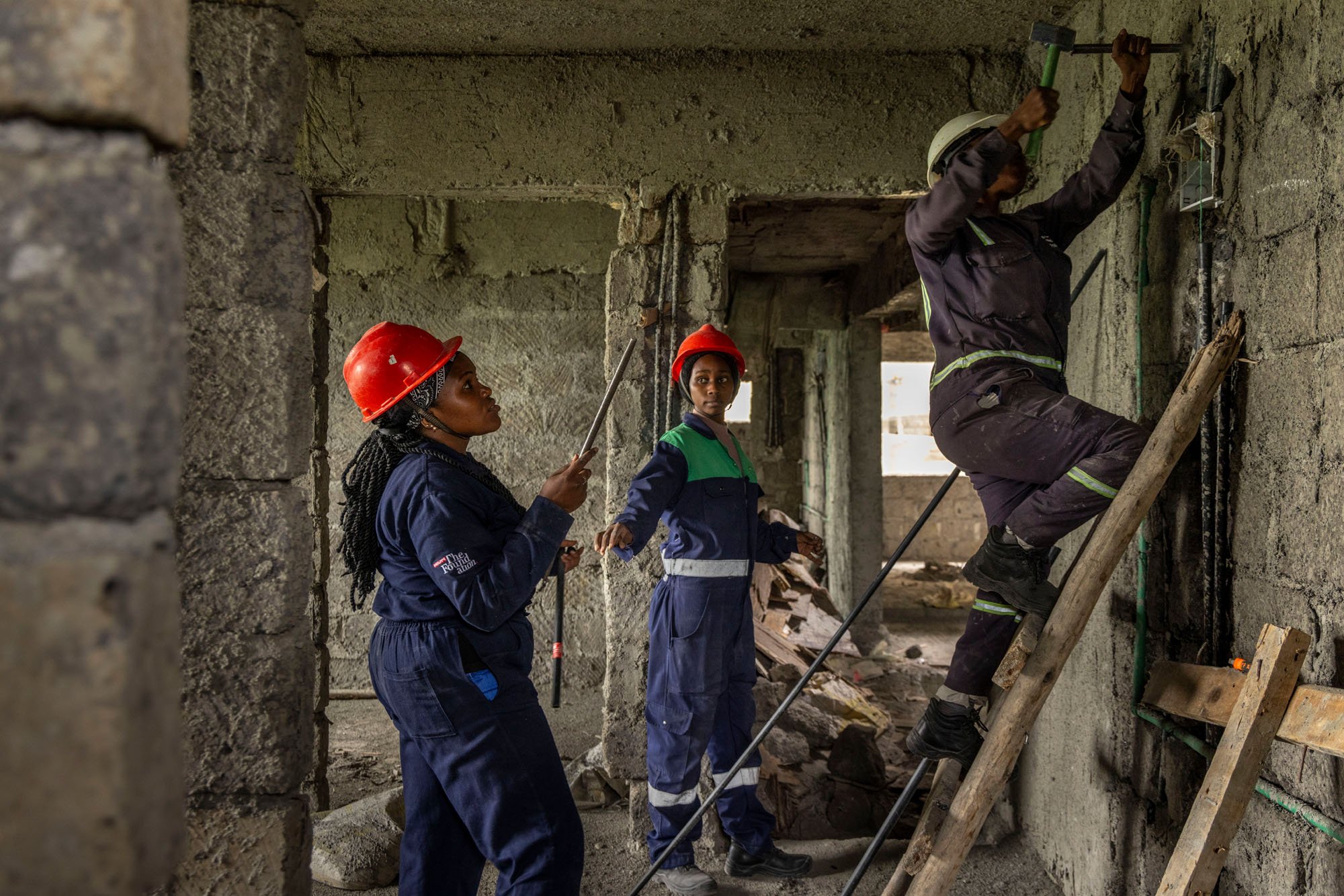
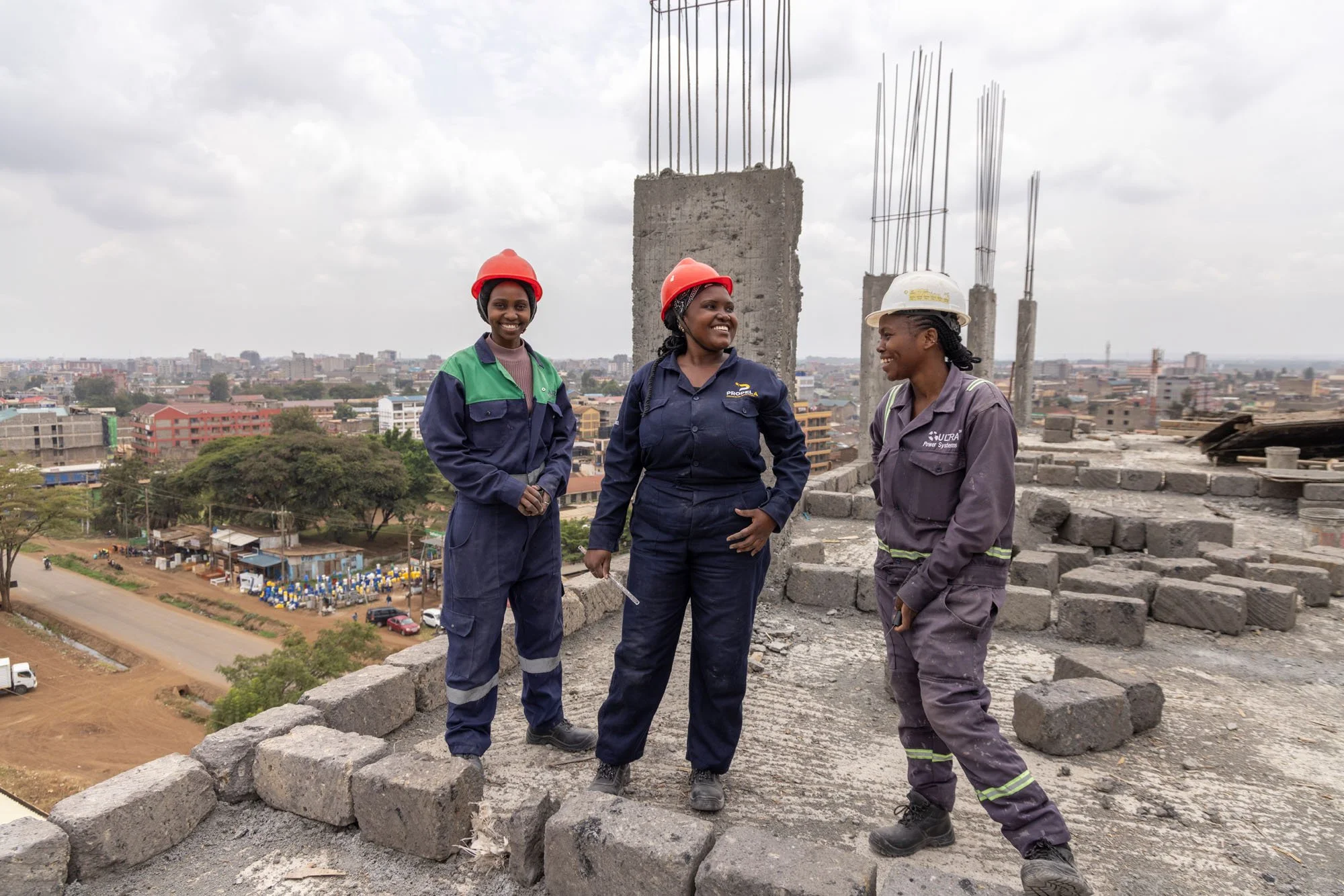
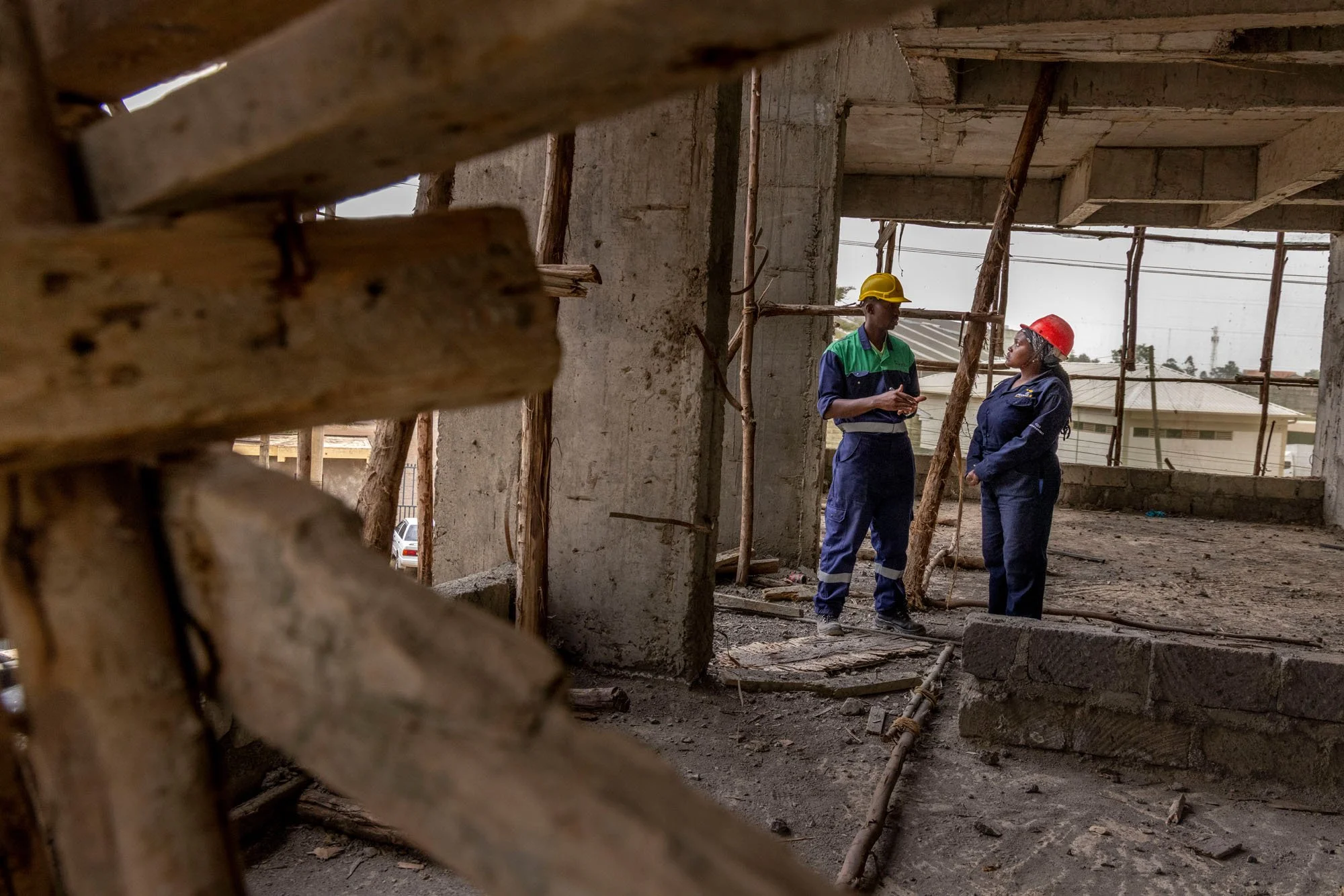
Life now has a comforting pattern. She spends one week a month at the PropelA training center and the following three at a residential building site where Ultra Power Systems is installing the electrical infrastructure. There, she trains under the supervision of seasoned electricians.
She wakes 4.30am each day. After prayers, a shower and a quick breakfast with her sister, she heads out to work, which begins at 7.30 often with more prayers and Bible readings on site.
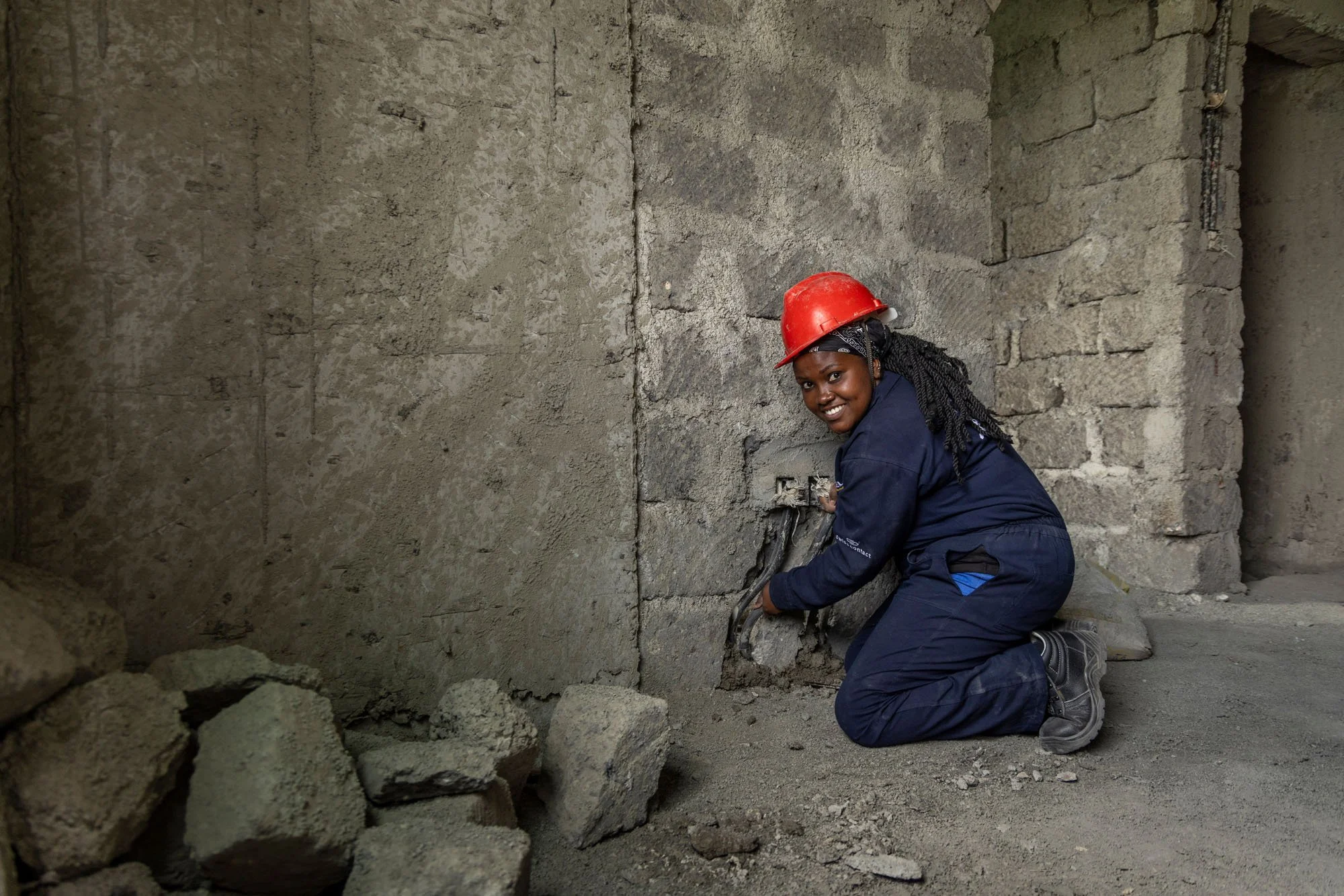
So far, she has mastered the basics of chasing—cutting channels in walls and embedding conduits— and has started molding socket boxes and fitting outlets.
“Every day I learn something new,” she says. “It requires a lot of energy and a lot of strength. I have the freedom to ask questions. The electricians are friendly and willing to help me. I’m working with people who have a lot of experience in the industry. I know I am going to learn a lot.”
She finishes work at 5pm and heads home to study, help with household chores, and catch up on laundry. If there is any spare time, she listens to podcasts on women’s issues or goes to church.
“I used to be idle and depressed and stressed,” she says. “I felt like I was a burden to everyone and that was really hard. But now I feel busy and I feel good about being busy.”
Best of all, she is hopeful again. The PropelA program is equipping her with skills, knowledge and experience. She feels confident that after two years she will have a full-time job and make her parents proud.
“I'm excited that later in life they will see me as a grown woman who is independent, who is working, financing herself and helping them out in the village,” she says. “What excites me the most is the possibility of giving my parents a better life.”
In the long run, she hopes to bring electricity to rural homes like the one she grew up in—perhaps by one day starting a small business where none exists, and inspiring other women to follow her lead.
“If God blesses me, I can definitely help them,” she says. “I can go into a village where there is no light and I can bring them light.”