
Side by Side for Humanity
Since the situation in Ukraine escalated in February 2022, a total of 1.5 million people have been killed or seriously injured on both sides. That makes this conflict by far the most bloody in Europe since the Second World War. The international relief organization Doctors Without Borders has been operating in Ukraine since the outset to help maintain acute care for the injured as well as basic medical care for the suffering civilian population. We provide a brief insight below into the specific challenges encountered by the relief organization and also how Hilti is supporting it on this mission.
Anybody visiting Ukraine today will be confronted with an almost surreal scene. Whereas everyday life in the country’s interior and in western areas goes on almost as normal, despite regular rocket and drone attacks, the east is experiencing utter devastation. As one edges closer to the front line – which can be between ten and 50 km wide, depending on the military operations underway – the tranquility of civilian life drains away. Here, the streets are occupied almost exclusively by soldiers and military vehicles on patrol, while the landscape and infrastructure paint a picture of total devastation.
Since the war broke out, Tankred Stöbe has already traveled close to this death zone on four separate occasions. The German specialist in internal medicine and emergency medicine has been working for Doctors Without Borders for more than 20 years. During this period, he has taken part in more than 30 relief missions around the world and has also occupied various leadership positions within the organization, including President of the German Section and a stint as a member of the International Board.
“As a medical coordinator, during these deployments in Ukraine I gained a firsthand insight into how we can best assist the civilian population still living in the hinterland adjacent to the front line, from the city of Sumy in the north to Odessa in the south”, states Tankred Stöbe, describing his main task. It is precisely here, close to the front line, that injury rates are often extremely high and the collapsing health system is largely overwhelmed.
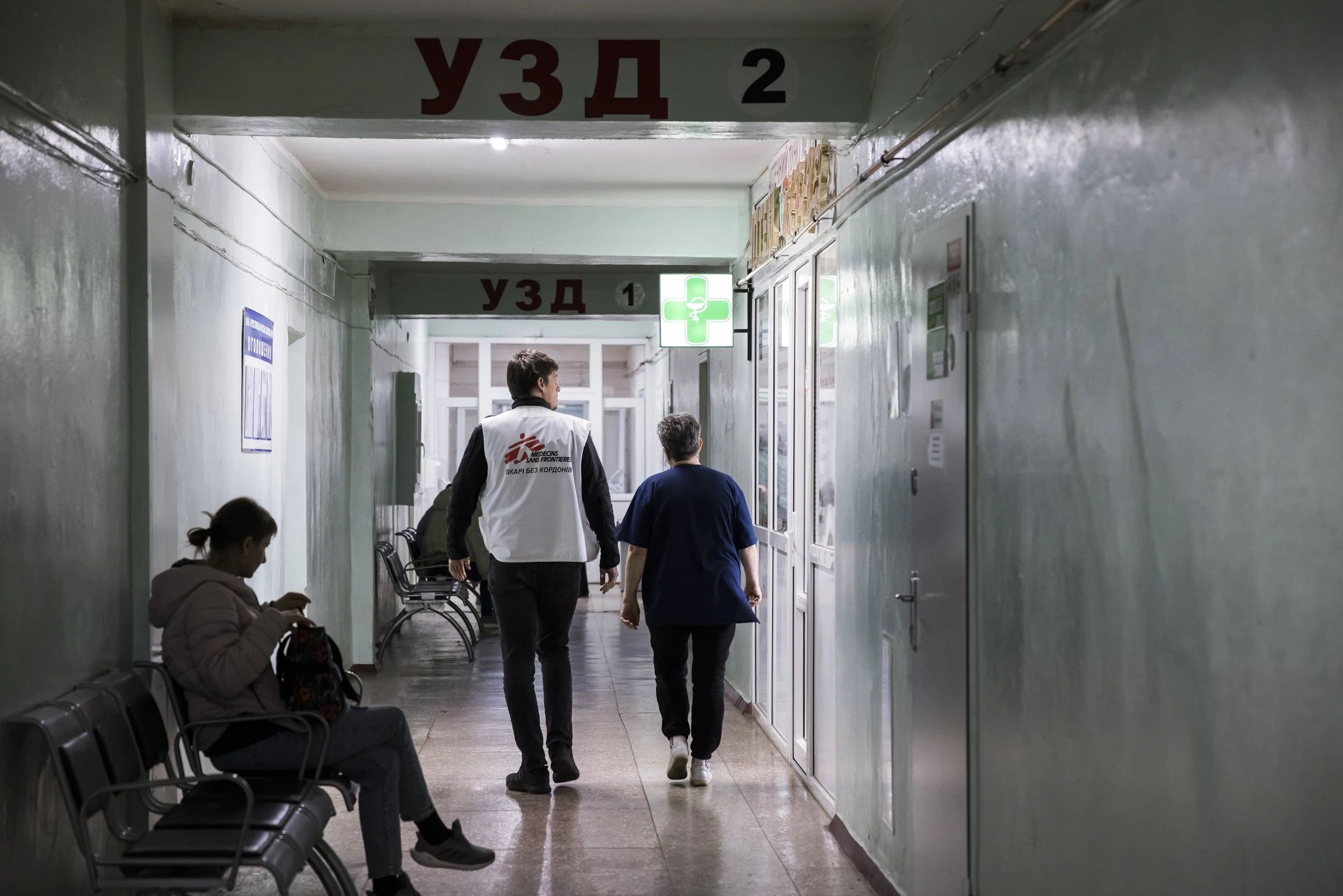
The relief organization is currently concentrating on operations in four areas in Ukraine. “First of all, we are supporting local hospitals in the vicinity of the front line with medical supplies and drugs. In addition, our predominantly Ukrainian colleagues work in these hospitals doing two-week on, two-week off shifts, after which they rotate out to be replaced by another team”, explains the emergency doctor.
A second priority is the transfer of critically injured patients to hospitals further away from the front line, which generally have better staffing levels and equipment. “At the start of the war we worked together with the head of the Ukrainian railroad to equip decommissioned railcars with intensive care beds along with the necessary equipment, which we have used to transport thousands of patients. Then in order to serve hospitals more flexibly, we subsequently set up an ambulance system, which currently uses more than 20 vehicles. Using this system, more than 30,000 of these patient transfers have been carried out over the last few years”, states Tankred Stöbe.
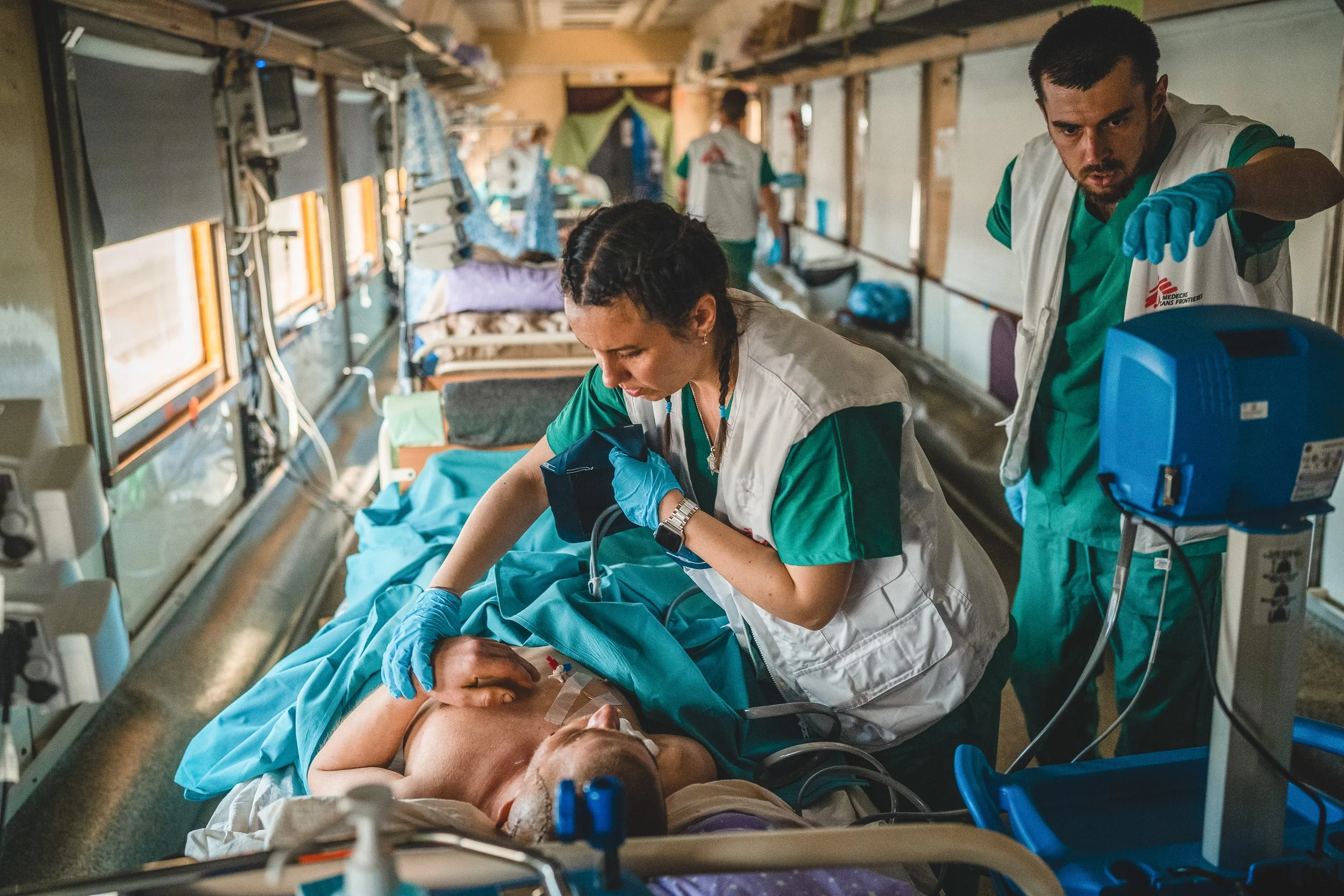
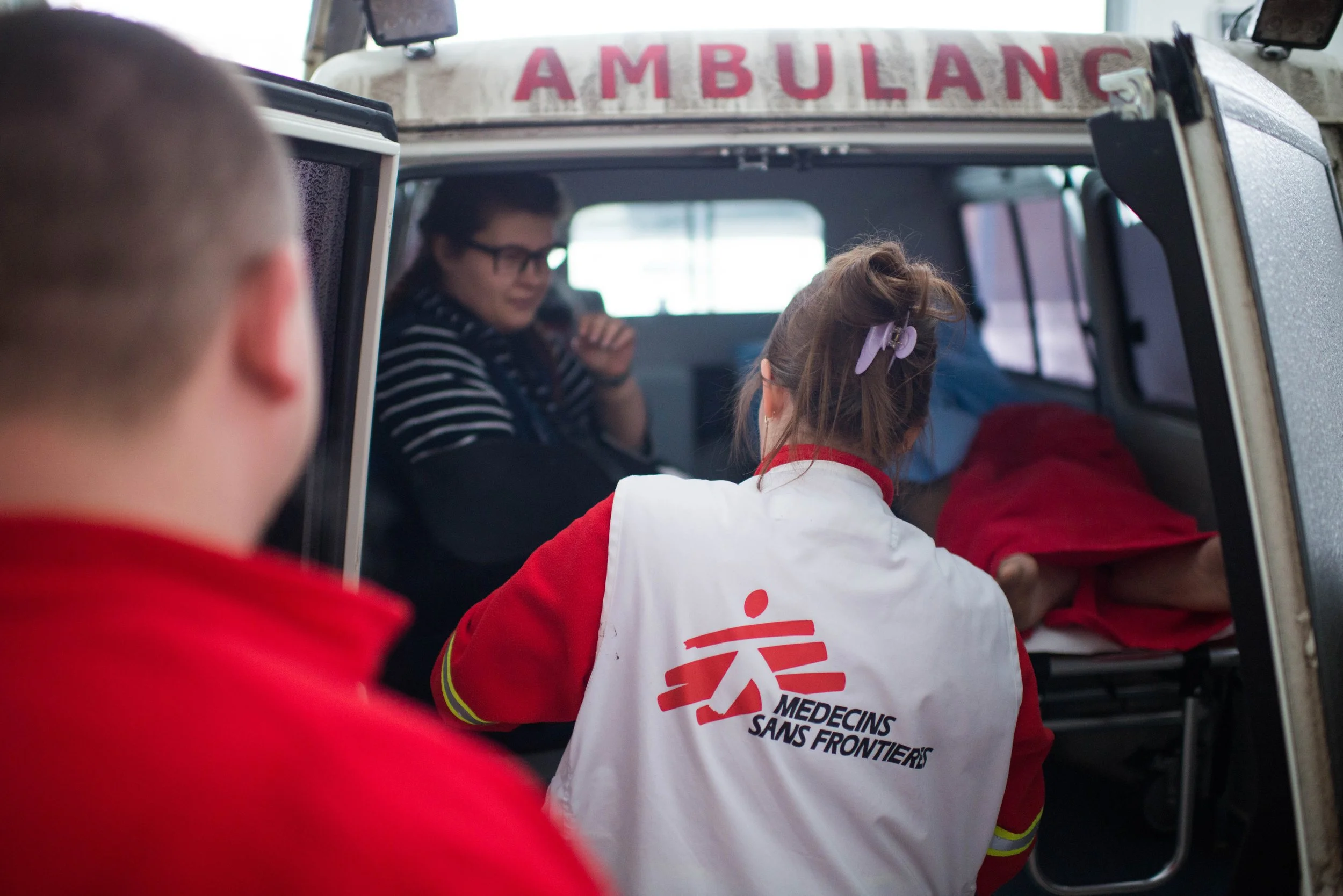
The relief organization’s third priority in Ukraine is to start with rehabilitation as early as possible. The experienced doctor explains how important this is: “The sooner this can start, especially following serious injuries, ideally within a week of the injury, the better the chances of recovery are.” This fact is particularly important, given current estimates of 500,000 severely injured people in the country. Last year alone, at least 8,000 of these have been able to undergo rehabilitation treatment with Doctors Without Borders.
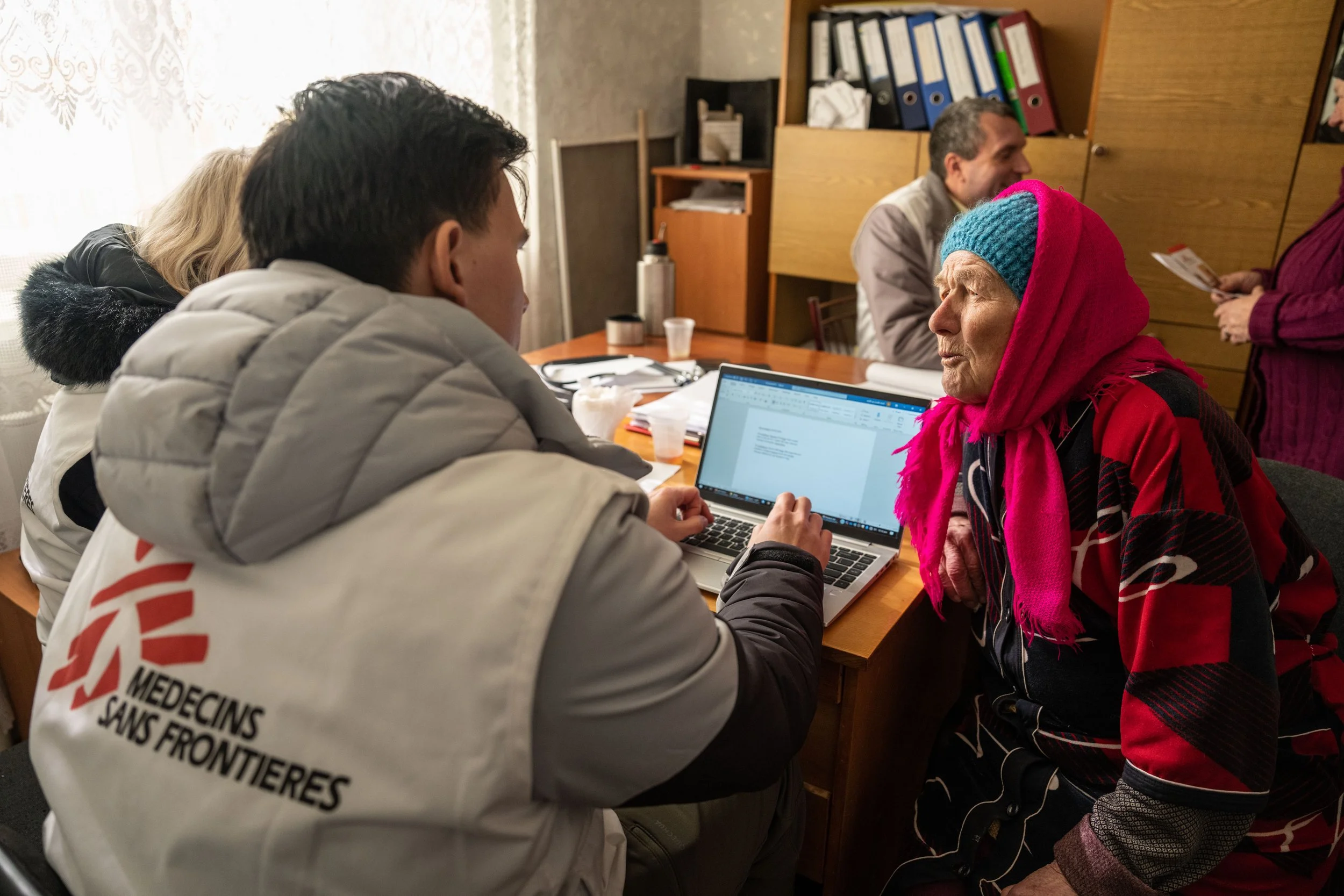
Finally, the fourth priority focus of the relief organization is currently the provision of care locally to chronically ill people, many of whom are still living along or near the front line. “This is a massive task for us, involving regular visits to villages or communities by doctors, nurses and psychologists. During this last year alone, we have carried out more than 40,000 medical consultations”, comments Tankred Stöbe, summing up the intense efforts in this area.
According to the German doctor, none of the work in these four main areas of activity would be possible without support from private companies like Hilti. In addition to the financial resources made available for several years out of the emergency fund, Tankred Stöbe also stresses the geographic information system (GIS) developed with the assistance of Hilti, which has already proved to be highly effective in other crisis areas. “This versatile system capable of storing vast amounts of data where required is indispensable for our everyday work in Ukraine, as it provides real-time updates concerning issues ranging from the current security situation through to the condition of medical facilities and equipment, enabling us to act appropriately.”
After the challenging relief mission in Ukraine, we make a brief detour to a decidedly more pleasant location: Geneva in Switzerland. Esther Schaufelberger works there at the headquarters of the relief organization Doctors Without Borders, and has been managing the partnership with Hilti for the last few years. “We have been associated with Hilti since 2009 in a long-term partnership characterized by mutual trust, built on two pillars: support in relation to both emergency relief as well as technical innovation”, explains the Head of Philanthropy. Around two thirds of financial resources are directed into the emergency relief fund and one third into technical innovation projects such as the geographic information system successfully implemented around the world, mentioned above. Another joint project already implemented involves a mobile surgical unit, enabling emergency medical treatment to be provided quickly to seriously injured patients, especially in areas without any functioning infrastructure, such as at present in Gaza .
“These two projects alone, which have been implemented with support from Hilti, are having a tremendously positive and sustainable impact on our work”, confirms the social anthropologist by training.
“In addition, the payments made by Hilti into our emergency fund ensure that, in the event of a sudden humanitarian catastrophe, we can really respond within the space of a few hours, and not only once we have secured the necessary resources.” Also, these funds guarantee long-term missions in crisis areas such as Sudan, which has long since vanished from public consciousness and media reporting, even though extreme suffering continues unabated.
Reliable support from private companies, foundations or individuals sustained over the years not only facilitates long-term planning security but is also of major significance when one considers current developments on the world stage. “We can see how other relief organizations and NGOs, which in contrast to us are reliant on state funding, are having to fight hard right now and in some cases have had to reduce their activities or deployments to zero. Even the recent cuts and funding withdrawals by the US Government have had a dramatic impact”, explains Esther Schaufelberger. “Our relief organization has always had a very strict policy in this area. We hardly ever accept support from governments, which also means we can always act independently.”
However, for Esther Schaufelberger the partnership with Hilti is special for another reason: its genuine spirit of humanity. By way of explanation, she recounts the following episode: “When the war broke out in Ukraine, in addition to the ordinary annual support from the Hilti Foundation, the company’s employees also donated generously in an immediate show of solidarity. In addition, extra funds were also raised at short notice in an internal auction of Hilti tools. I was impressed by how people at Hilti looked spontaneously and efficiently for ways in which they could help out as quickly as possible.”
We now return briefly to Ukraine, as one of the places where relief funding goes, in addition to other crisis areas. For Tankred Stöbe the significance is far greater than the material value. “As a doctor and as a human being, during previous missions it was often frustrating and exhausting for me to see all of that suffering, while also knowing that nothing or hardly anything will change, even when the whole world is looking on”, the doctor openly confesses. “In situations like this, hope and optimism usually only arise through humanitarian efforts. And it is here that relief efforts such as those made by Hilti for many years take on a very special significance. Both the population affected and we relief workers feel an extraordinary sense of appreciation and humanity, which restore the belief in a better future. And I would simply like to convey this personal experience to the Hilti Foundation and all of the company’s employees.”